Cockroach Allergen and Avoidance
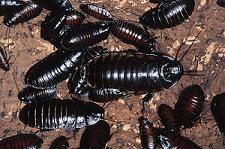 Cockroaches are present in most homes even though you can’t see them. In fact, if you see a cockroach during the daytime, this usually means there is a major overcrowding of cockroach populations and significant infestation in the home. The two major species of cockroach in the United States are the German and American cockroaches. There is now a significant amount of information in the medical literature that supports a relationship between cockroach sensitization and allergies and asthma. Some findings are:
- Many inner-city children with asthma are allergic to dust mites, cockroaches, and cats. In this study, cockroach allergen level in the bedroom were approximately five times higher than dust mite and cat allergen levels. Children with cockroach allergy and high cockroach bedroom exposure levels were at a much greater risk for hospitalization and unscheduled medical visits for their asthma and had more asthma symptoms compared to other children with asthma. The combination of cockroach sensitization and high levels of cockroach exposure may explain the increased frequency of asthma among inner-city children.1
- African American race and low socioeconomic status were significant independent risk factors for cockroach allergen sensitization in children with atopic asthma.2
Cockroach Avoidance
Cockroach management and control is possible but requires persistence. Cockroach allergen levels can persist for several months after extermination. Furthermore, there have been no effective measures developed thus far that can kill cockroach eggs. Therefore, to effectively control cockroach populations and allergen levels, interventions must be conducted on a regular bases every one to two months. If you are not sure you have a cockroach problem, place cockroach traps in common access points such as under sinks. If nothing shows up after several days then it is likely you do not have a cockroach problem. However, if cockroaches are found in the trap then effective avoidance recommendations include:
- Removal of food sources and household food wastes. Foods should be stored in sealed containers.
- Reducing their access to water. Fix leaking faucets and/or prevent water condensation on pipes.
- Improving ventilation to eliminate damp areas.
- Caulking or sealing cockroach access and entry points.
- Spraying cockroach runways around kitchen cabinets and drawers with insecticides known to kill cockroaches. Note: Insecticides will kill the parent cockroach but will not kill their eggs. Therefore repeated spraying with bait stations every one to two months is necessary to effectively control cockroach populations.
- Thorough and frequent housecleaning to remove dust and cockroach byproducts.
If these interventions are maintained, recent studies have shown that cockroach allergen levels will decrease in the home after 6-12 months.
For more information about allergy avoidance and environmental control, please read Brandt DM, Levin L, Matsui E, et. al. Allergists’ attitudes toward environmental control: insights into its current application in clinical practice. J Allergy Clin Immunol. 2008 Apr;121(4):1053-4. Epub 2008 Jan 30. A free copy of the authors’ manuscript can be found through NIH Public Access.
References
- Rosenstreich DL, Eggleston P, Kattan M, et. al. The Role of Cockroach Allergy and Exposure to Cockroach Allergen in Causing Morbidity Among Innter-City Children with Asthma. N Engl J Med 1997; 1356-63.
- Sarpong SB, Hamilton RG, Eggleston PA, Adkinson NF. Socioeconomic Status and Race as Risk Factors for Cockroach Allergen Exposure and Sensitization in Children with Asthma. J Allergy Clin Immunol 1996; 97: 1393-1401.
For more information:
Go to the Allergies health topic.